|
|
|
|
||||||
 |
 |
|
|||||||
|
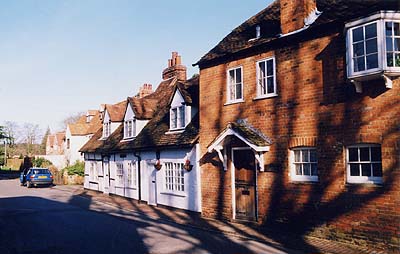
Hurley is a pretty village, down by the Thames, with reminders of its medieval monastic past scattered amongst its later houses. St Birinus is said to have inspired the building of the parish church there, around AD 700. The Vikings forded the Thames at Hurley in AD 894 when marching from Essex to Gloucester and may have destroyed this early building. The church was rebuilt as a Benedictine priory in the mid-11th century in memory of Athelaise, the first wife of William the Conqueror’s friend, Geoffrey de Mandeville, who was lord of the manor. It was dedicated by St Osmund. Geoffrey’s second wife, Lasceline, had persuaded him to establish the nunnery and she was later buried there herself, along with Princess Edith, sister of King Edward the Confessor. The aisleless parish church of today is all that remains of this old Norman priory church. The 13th and 14th century refectory and other monastic buildings around the lost cloister are now a private home but can be seen through an adjoining arch. To the west is a dovecote and tithe barn. The Old Bell Inn, nearer the main Henley Road, is one of the claimants to the title of the ‘oldest pub in England’. It is thought to have been the Priory’s guesthouse, established in 1135. The sanctus bell hung above its door and was rung to announce the arrival of new guests. One such was Henry IV who arrived there just after murdering his predecessor, Richard II. He came to pray for the soul of his late wife but ended up discussing the monastery’s privileges. To the east of the priory church, down by the river, stood the priory’s infirmary. After the Dissolution of the Monasteries, this was converted into a mansion called Ladye Place, the home of the Lovelaces from 1545. It was named after the Virgin Mary to whom the priory had been dedicated. Richard Lovelace sailed with Sir Francis Drake and rebuilt the house in Elizabethan splendour with his share of the Spanish booty. His son was created Lord Lovelace of Hurley in 1627, and his monument can be seen in the church. The family had many connections with national events. In October 1666, the 2nd Baron is recorded to have heard a case in the Hurley Manor Court at which a certain Edward Taylor, a boy of ten, claimed that his father and uncle had started the Great Fire of London, throwing fireballs into shops and businesses. This would seem to boost the contemporary theory that it was set by Catholic conspirators. However, it is generally believed that the fire began in a baker’s oven that had been accidentally left alight overnight. So, if Taylor’s story was true, presumably his relatives only helped in the spread of the flames. It’s not clear why the case was heard in Hurley, presumably Taylor had fled there. Other fire victims certainly ended up in nearby Windsor. Shortly afterwards, the extravagant 3rd Baron magnificently embellished the building’s interior with fabulous painted rooms and ceilings by Antonio Verrio, who also worked at Windsor Castle. Later in the same century, the crypt of Ladye Place (and the old infirmary) was the scene of plotting by John, 3rd Lord Lovelace and his friends who helped bring about the Glorious Revolution of 1688 (when William III came to the Throne). The King later paid John a visit to express his thanks. The old Tudor mansion was scandalously demolished in 1837, but the crypt still survives in private hands. Read more history of
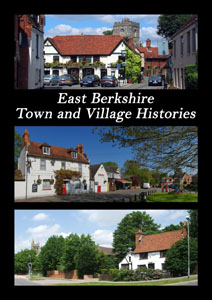
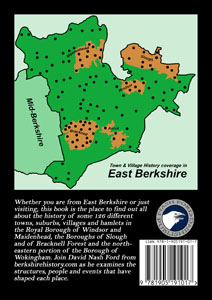
Hurley and other settlements in the parish in David Nash Ford's book, 'East Berkshire Town and Village
Histories'.
|
|
|||||||
| © Nash Ford Publishing 2001; Revised 2020. All Rights Reserved. | |
||||||||



 Hurley