|
|
|
 Braywick Braywick
Grand Houses near Bray
Braywick is one of the earliest places settled in the Thames Valley. Excavations have shown that Mesolithic man undertook flintworking there producing finely worked microliths. Neolithic man followed and it is believed that his pottery found in the area is some of the earliest ever discovered in Britain, from around 3,340
bc.
The word ‘wick’ most commonly indicates an Anglo-Saxon settlement based around a dairy farm. This one was originally associated with the manor of
Shoppenhangers, which means Hanging Woods i.e. hillside woods on Harvest Hill. Throughout the 17th and 18th century it was one of the main homes of the Winch family who were widespread in Bray parish. The most recent manor house was scandalously demolished in 2007, despite being very attractive and quite unique. It gave the appearance of being 17th century but was built in 1915 by an antique dealer from Sussex. He used completely authentic salvaged materials throughout the building, including some from the old manor house of Foxleys at
Touchen
End.
Bray Wick was one of the ancient tithings of the parish of Bray. Local records in 1517 show that the ‘tithingman’ in charge there was somewhat intolerant and threatened an unfortunate lady named Alice Smythgate with a fine and “bodily punishment” if she did not refrain from “babbling” and using her “unruly tongue”. In the next century, the village was known for its windmill which stood on Windmill Hill.
Another manor in Braywick, on Canon Hill, was owned by Reinbald the Priest, Dean of the Prebendary College at Cirencester at the time of the Domesday Book (1086). He was rector of some 30 churches across the country, Bray amongst them. In the late 13th century, the manor passed to Cirencester Abbey and the Abbot appears to have had an extensive grange (or farming) complex there. Canon Hill House was a 17th century mansion built on the site with later Adams’ ceilings and a private chapel. It was demolished in 1973. Well-House, built on the Kitchen Garden of Canon Hill House was so named because it had a well used as an ice-house. The ice used to be brought by horse and cart from Slough. The beams in the house were said to be made from ship-timbers.
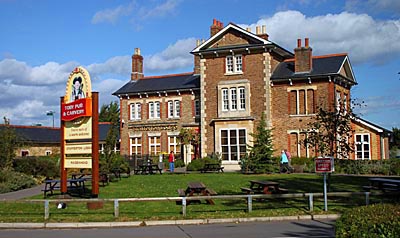
Braywick
House (previously
Braywick Grove) was built for Sir William Paule in 1675. It is now offices but can be easily viewed from the main
Maidenhead
Road. The 18th century Braywick Lodge, home of the Hibbert family, no longer stands, but its grounds are a public park and Hibbert Road remembers their name. The mid-Victorian villa, Stafferton Lodge (previously spelt Staverton Lodge), is now a popular restaurant. It was built on the site of a secondary home of the Tudor Staverton family of Stroud Manor at
Holyport. The original building at Braywick was called ‘Little Stroud’.
Read more history of
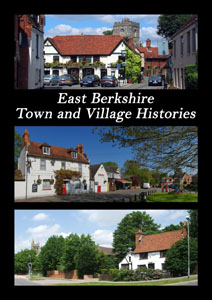
Braywick in David Nash Ford's book, 'East Berkshire Town and Village
Histories'. Click
to Order direct from the Author.
 |
 |
NEW
BOOK
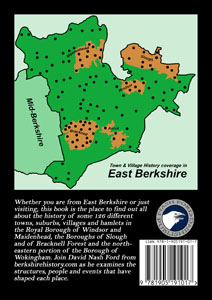
Whether
you are from East Berkshire or just visiting, this book is the
place to find out all about the history of some 126 different
towns, suburbs, villages and hamlets around Windsor and
Maidenhead, Slough and Bracknell Forest. Join David Nash Ford
from berkshirehistory.com as he
examines the structures, people and events that have shaped each
place. Some of these histories were first published in part here
on this website, but they have all been considerably expanded
and are joined by many new histories of places often missed by
historians, including those which only joined Berkshire in 1974
or later. Click
for full details and purchase options.
|
|
|
|
 |